
3D design is known as one of the main global advertising tools that many businesses use to professionally introduce their services and products. This gradual development has occurred over time. Because humans have always sought to convert 2D images into 3D to make them closer to reality. This technology stems from our inherent desire to experience the 3D world, the world we live in, 3D design provides a more realistic reflection of it. Follow us as we explore the principles of 3D design.
What is 3D design?
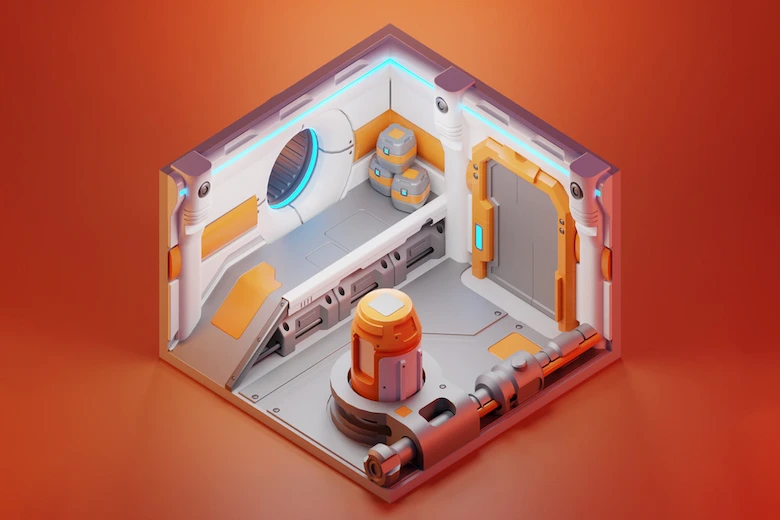
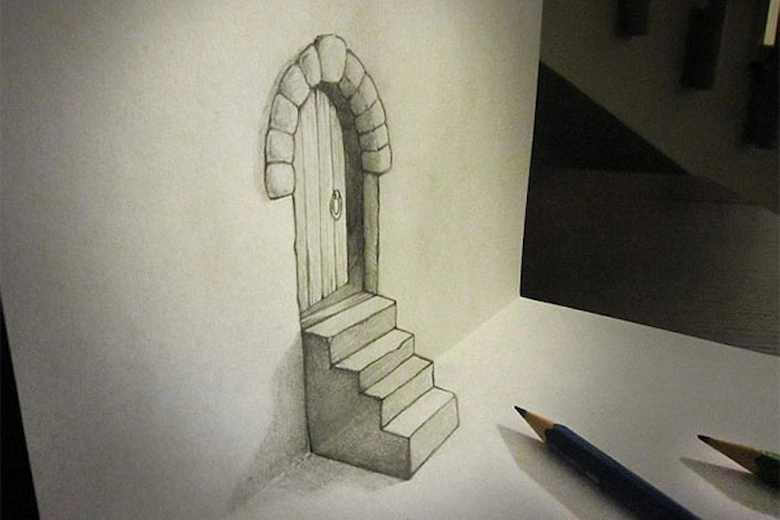
3D design refers to the process of creating models, objects, or virtual scenes with three dimensions (length, width, and height) in a digital space. This is done using specialized software that allows for modeling, texturing, lighting, animation, and rendering. Unlike 2D design, which is based on a flat surface, 3D design gives objects depth and volume, allowing them to be viewed, rotated, and interacted with from different angles. From creating video game characters and animated films to architectural and engineering simulations, 3D design is a powerful tool for visualizing ideas and creating virtual realities that are widely used in various industries.
Principles of 3D design
To achieve striking appeal and impact, 3D design relies on a set of fundamental principles that effectively convey a message and establish a deep connection with the audience. We will discuss these principles below.
Modeling
Modeling is the first and perhaps most fundamental step in the 3D design process. In this stage, the artist uses specialized software to shape basic geometric shapes and transform them into complex models of objects, characters, or environments. This work is very similar to sculpting; except that our tools are digital points, lines, surfaces, and volumes. Don’t forget that attention to detail, correct proportions, and adherence to anatomical principles (in the case of characters) are key factors in the success of this stage.
Texture
Once the 3D structure of an object is complete, it is time to texturize it to double its realism and visual detail. In this stage of 3D design, the artist opens the model’s surface map and applies designs, colors, patterns, and details such as scratches, roughness, or glossiness to it. This process is like painting on a 3D canvas, bringing objects to life and taking them out of their initial lifeless state. The quality of the texturing has a direct impact on the final believability and appeal.
Lighting
Lighting plays a vital role in creating atmosphere, volume, and depth in 3D design. Lighting designers control the way light shines, shadows, and reflections by placing virtual light sources in the scene. This step is just as important as the colors and layout of a website design to convey the desired feeling to the user. Choosing a new type (hard, soft, colorful), its direction, and intensity can completely change the feel of the scene.
Camera movement
The camera in 3D design is the viewer’s eye, which determines the angle of view and framing of the scene. Choosing the right camera position, lens angle (wide, telephoto, and normal), and depth of field have a huge impact on how the audience perceives the space and the elements within it. Keep in mind that directing the camera, like choosing the right angle for photography or videography, can help focus and guide the viewer.
Animation creation
Animation is the process of bringing 3D design to life and bringing motion and dynamism to static objects and characters. Animators create moving scenes by defining keyframes and adjusting the path, speed, and acceleration of objects over time. This process requires a deep understanding of the physics of motion, timing, and execution to ensure that the final result looks natural and believable.
Rigging and Skinning
Rigging and skinning are two specialized steps used primarily for character animation in 3D design. Rigging involves creating a virtual bone structure within a 3D model that allows the animator to control various components of the model, much like puppeteering. Skinning is the process of attaching (or skinning) the outer surface of the model to these virtual bones, so that as the bones move, the surface of the model naturally deforms, and creases and strains appear realistic.
Rendering
Rendering is a stage of 3D design during which all the scene information (models, textures, lights, camera, etc.) is processed by software and converted into a 2D image or video sequence. This process performs complex calculations to simulate how light interacts with surfaces and create realistic shadows and reflections. The quality of the rendering directly depends on the processing power of the system and the settings applied, and can take hours or even days.
Visual completion and final processing
This is the final stage in the 3D design cycle, where the rendered output is enhanced and final adjustments are made using video and image editing software. These adjustments can include adjusting color and contrast, adding special effects (such as lighting effects, smoke, or explosions), blending with other elements, or applying other visual filters.
Application of 3D design
3D design, with its unparalleled capabilities in visualization and simulation, has become a mainstay in many modern industries. Below are some of the applications.
Architecture and urban planning
In the field of architecture, 3D design allows architects and designers to create accurate models of buildings, interior spaces, and even entire cities before construction. These models also help employers and investors to have a clear vision of the final project and make necessary changes before construction begins.
Automotive industry
3D design plays a vital role in the automotive industry. From the initial design of the body and components to the simulation of engine performance and safety tests, all stages are carried out with the help of 3D design software. This method allows for rapid testing of different designs and their optimization, before any physical prototypes are built.
Video games and entertainment
Almost all modern video games and special effects in films rely on 3D design. The creation of 3D characters, environments, objects, and animations creates a rich and engaging visual world for the audience. This field is one of the leading consumers of 3D technologies.
Graphic design and advertising
In the world of graphic design, 3D design has a variety of uses. Among them are 3D logo design, which gives brands depth and a modern look. Also, 3D modeling of products for display in advertising banner and poster design, doubles their visual appeal.
Visual identity and branding
3D design can play an important role in developing a brand’s visual identity. From designing an office set that includes business cards, letterhead, and envelopes to the precise details in a brand book design, using 3D elements can help your brand stand out and stay in the audience’s mind.
Printed and marketing materials
3D design is used in the creation of attractive packaging, brochure and catalog design with 3D product displays, and even special business card design to attract customer attention and better convey product features. This approach improves the customer’s visual experience.
Medical and educational
In medicine, 3D design is used to visualize human anatomy, simulate surgeries, and design custom prosthetics. It is also used in education to help students better understand complex scientific or historical concepts by creating 3D models.
The world's first 3D design
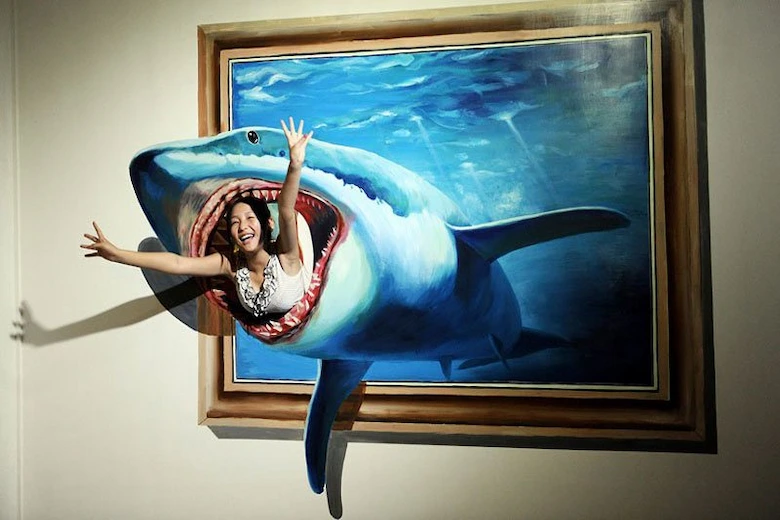
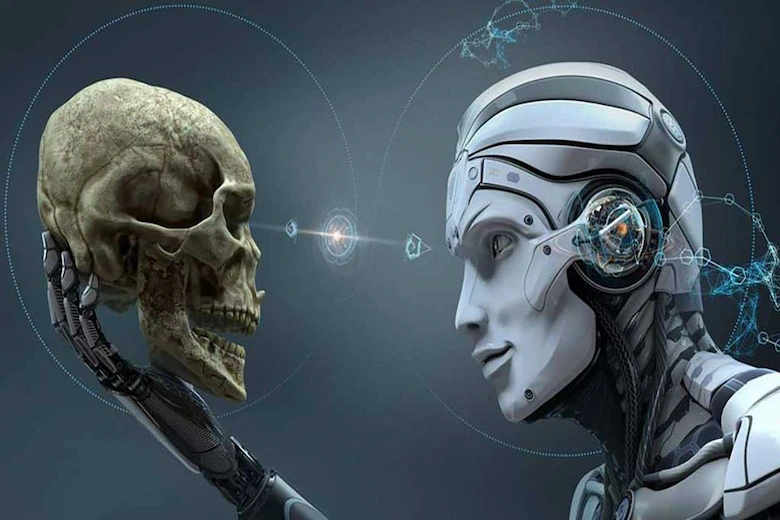
3D design, which is now an integral part of the creative and engineering industries, has a long history. Here are 10 of the world’s first 3D designs.
Ancient Greek sculpture (e.g. Venus de Milo)
Cave paintings (prehistory)
Gothic architecture (e.g. Notre Dame Cathedral)
Leonardo da Vinci’s drawings (e.g. anatomical drawings)
Early examples of stereoscopic photography (mid-19th century)
Early 3D animation (e.g. The Adventures of Andre and Wally B)
Early 3D computer models (1960s)
Pioneers of 3D computer graphics (e.g. Evan Sutherland)
Early 3D special effects films (e.g. Westworld)
Development of CAD software (1980s)
Final Words
As a powerful paradigm, 3D design has not only transformed the way we create and visualize, but has also become a key tool for innovation across a wide range of industries. From facilitating engineering and manufacturing processes to enhancing user experiences in entertainment and education, this technology has opened up unprecedented possibilities. The increasing integration of 3D design with advanced technologies such as virtual reality, augmented reality, and artificial intelligence promises a future where the boundaries between the digital and physical worlds are blurred and human creativity flourishes with more powerful tools. 3D design is a roadmap to a future where our imaginations become reality with unparalleled precision.
For more information and a free consultation, you can contact us at Amood Design and Branding Group.